






























When Independence Day Came Alive in the Smiles of Children
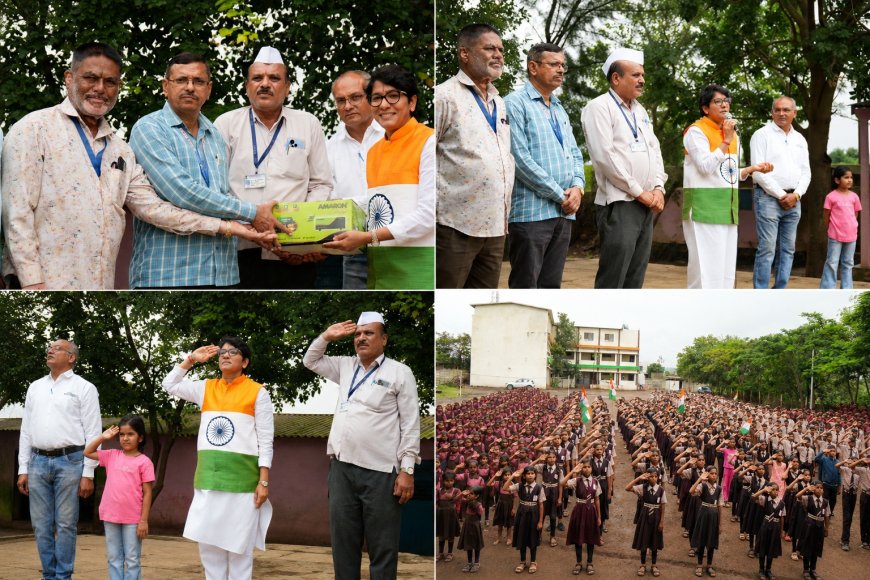
There is something quietly special about an August morning in Igatpuri. Nestled amid the Sahyadri hills, the cool breeze, lush green surroundings and the sight of the Tricolour rising against the landscape create an atmosphere that is difficult to describe in words. Yet this year, at an Adivasi school in Igatpuri, Independence Day carried a meaning that went beyond the familiar rituals of flag hoisting, patriotic songs and celebrations.
It was a morning when the spirit of freedom reached children not merely through speeches, but through action, care and a simple helping hand.
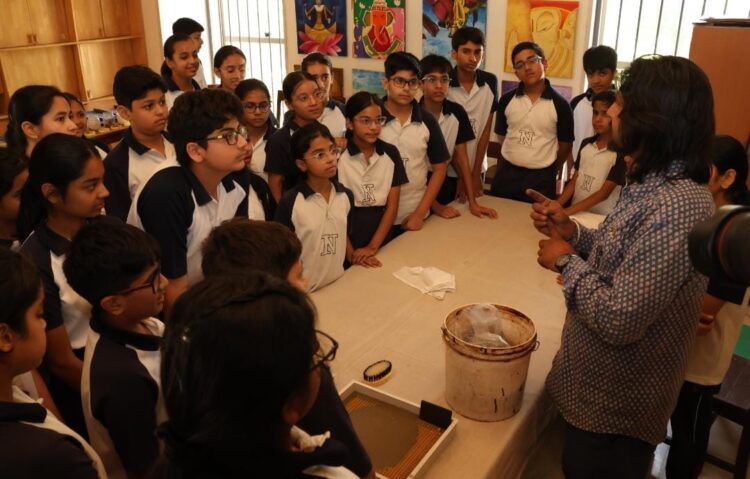
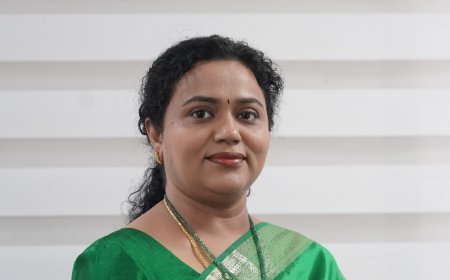
Gurumaa Yogita Khatri of Nirvana Naturopathy and Retreat, Igatpuri, Nashik, arrived at the school not with the air of a formal chief guest, but with the warmth of someone who genuinely wanted to be among the children. She walked into their midst, spoke to them, listened to them and gradually the initial hesitation disappeared. What emerged was a natural interaction between Gurumaa and the students, marked by laughter, curiosity and the uncomplicated smiles of children.
As India celebrates its 80th Independence Day, celebrations across the country will understandably be filled with ceremonies, speeches, cultural programmes and patriotic fervour. But Independence Day can also be an opportunity to look beyond celebration and ask a more meaningful question: how can the freedom and progress we speak about reach those around us?
For Gurumaa, the answer lay in making the occasion useful for the children.
One of the most practical initiatives undertaken at the school was the installation of an inverter. It may appear to be a modest intervention, especially when compared with the scale of India's development story, but for a school where interruptions in electricity can affect the learning environment, such a facility can make a meaningful difference.
The initiative reflected an important principle: meaningful social responsibility begins by understanding a real need before offering a solution. Rather than simply making a symbolic contribution, the focus was on providing something that could have a direct and lasting utility for the students and the school.
The celebrations also extended to the environment. Gurumaa planted trees with the children within the school premises and encouraged them to see the activity not merely as an Independence Day programme, but as a responsibility towards the future. The children participated enthusiastically, putting their hands into the soil, planting saplings and watering them.
There was a simplicity to the exercise, but also a larger message. Environmental consciousness is often discussed through lectures, campaigns and presentations. Children, however, can understand the value of nature more deeply when they experience it themselves. A sapling planted with their own hands becomes more than a plant; it becomes something they can watch grow and eventually associate with their own memories.
Then came the part that brought perhaps the widest smiles. Sweets and juices were distributed among the children. Yet the real warmth of the moment was not in the distribution itself. Gurumaa continued to sit with the children, talk to them and listen to their conversations. Some spoke about their studies, while others shared their dreams for the future.
For a child, being heard can sometimes be as meaningful as receiving a gift.
The atmosphere reached its most powerful moment during the flag-hoisting ceremony. As the Tricolour rose, the expressions on the children's faces reflected pride and excitement. The National Anthem brought everyone together in a moment that needed no elaborate scripting.
Standing beneath the same flag, distinctions of status, background or position seemed irrelevant. There was no guest and no host at that moment. There were simply Indians standing together in respect for the nation.
The Tricolour was saluted with pride, reminding everyone present of a simple truth: whatever our differences, the identity that unites us is that of being Indian.
For a journalist who has witnessed many public events, the difference between a formal programme and a meaningful one is often visible in the smallest details. Large banners, decorated stages, speeches and cameras can create an impressive event, but the real measure of a social initiative lies elsewhere.
It lies in whether people are genuinely engaged.
At this school, the children's expressions seemed to tell the story more effectively than any banner could. Gurumaa repeatedly turned her attention towards them, listened to their concerns and interacted with them without creating a formal distance. The impression was that social responsibility was not being treated as a publicity exercise, but as a natural extension of her personal and professional outlook.
India's development journey today is defined by conversations around education, technology, infrastructure, economic growth and opportunity. All of these are essential. But the real strength of a nation is also measured by how equitably that progress reaches its children.
An inverter will not transform an entire education system. A packet of sweets or a glass of juice cannot be described as a national achievement. Planting a few trees will not solve India's environmental challenges overnight.
But nation-building has rarely been about one grand gesture.
It is built through thousands of small, consistent acts of responsibility.
Gurumaa's Independence Day initiative carried precisely that spirit. There were no sweeping claims and no grand declarations. There was simply an effort to contribute where it could make a difference, to spend time with children and to make a national celebration meaningful at a local level.
Perhaps that is why the morning stayed with those who witnessed it.
Independence Day often makes us reflect on what the nation has given us. This year, perhaps there is value in asking another question: what are we willing to give back?
It could be supporting a child's education, improving a school facility, planting a tree, mentoring a young person or simply bringing genuine happiness to someone who needs it. These may appear to be small contributions, but a stronger India is ultimately built through such everyday acts of citizenship.
At the Adivasi school in Igatpuri, the Tricolour represented more than freedom from the past. It also represented hope for the future.
And when the children smiled and said Jai Hind, there was a sense that the true meaning of Independence Day had found its simplest expression.
The celebration had brought together education, environmental responsibility, community support, childhood joy and national pride.
Perhaps that is what freedom looks like when it is lived rather than merely celebrated — when the progress of the nation begins with the smile of one child, the planting of one tree, the solution to one practical problem and the willingness of one person to extend a helping hand.
In Igatpuri, on an Independence Day morning, the Tricolour flew high.
But for a few hours, its spirit also lived in the smiles of the children.
What's Your Reaction?







Shivam Madaan
Media Influencer