
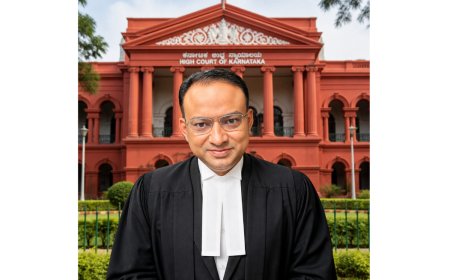





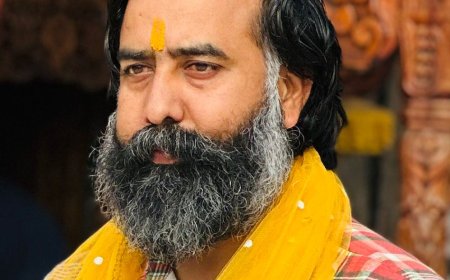




































Before 'I Do': Why India Needs a Pre-Marriage Medical Screening Law, Says Advocate Anik M. Iktear Uddin
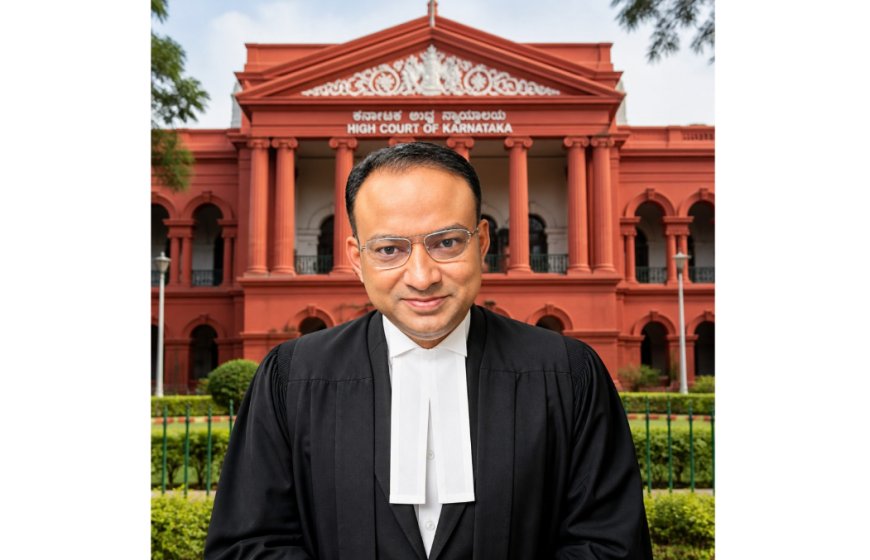
Drawing on matrimonial disputes over concealed health conditions, an advocate with 18 years of experience argues that India needs a carefully designed pre-marital health disclosure framework built on informed consent, not compulsory fitness certification.
A marriage may begin with love, trust and family celebrations, but what happens when a serious health issue that could materially affect married life is discovered only after the wedding? That question sits at the centre of a growing body of matrimonial litigation in India, and it is one that Advocate Anik M. Iktear Uddin, who has practised law for 18 years, believes deserves far more public attention than it currently receives.
Advocate Anik points to a disturbing matrimonial dispute in which a wife alleged that her husband suffered from erectile dysfunction and, instead of addressing the medical problem, allegedly asked her to have a sexual relationship with his friend so that they could have a child. Whether every allegation in such cases is ultimately proved is a matter for the court to decide. But disputes of this nature, he argues, raise a larger question: should couples be mandatorily required to undergo appropriate health screening before marriage?
His answer begins with a clarification of what the debate is actually about. According to Advocate Anik, the issue is not about judging a person's health, fertility or sexual capability. It is about informed consent.
What the Courts Have Already Grappled With
Indian courts have repeatedly encountered matrimonial disputes involving infertility, impotency, mental health and concealment of medical conditions. In Deep Mukerjee v. Sreyashi Banerjee, the Supreme Court considered a matrimonial dispute involving alleged non-consummation due to the husband's impotency and upheld, to that extent, a direction requiring the husband to undergo a medical potentiality test.
In another recent development, the Chhattisgarh High Court upheld a divorce where the court found that concealment of a significant medical condition affecting matrimonial life and the prospect of childbirth amounted to mental cruelty. The case is significant, Advocate Anik notes, not because every medical condition should become a ground for divorce, but because it demonstrates the consequences that may follow when material health information is allegedly withheld before marriage.
A Problem Wider Than Infertility
The concern, Advocate Anik explains, extends well beyond fertility alone. A recent study of women experiencing delayed conception in North India found that 17.1 percent reported emotional abuse from their partners and 2 percent reported divorce; among women reporting pressure from other family members over delayed conception, 48.9 percent reported emotional abuse and 2.7 percent reported divorce. These figures do not establish that infertility causes divorce, but they illustrate how reproductive health can become a source of significant marital and family conflict.
India also lacks comprehensive national statistics showing how many divorces are directly attributable to medical conditions, Advocate Anik points out, adding that this statistical gap itself deserves attention. A study of 100 couples seeking divorce in a Mumbai family court found interpersonal problems to be the most common reported reason, at 34 percent, while sexual dissatisfaction and psychiatric illness each accounted for 5 percent of the recorded reasons. The same study also found significant psychological distress among many participants.
Balancing Privacy Against Informed Consent
Advocate Anik is careful to frame this as a difficult balance rather than a simple fix. On one side is the individual's fundamental right to privacy, bodily autonomy and medical confidentiality. A person should not be forced to disclose every medical detail merely because they intend to marry, and any mandatory medical regime, he cautions, must never become a tool for discrimination against persons with disabilities, chronic illnesses, mental-health conditions, infertility or other health conditions.
On the other side sits the principle of informed consent. If a person knowingly conceals a serious condition that substantially affects sexual relations, reproduction or the fundamental expectations of matrimonial life, the other prospective spouse may enter the marriage without information that could materially influence their decision to marry at all.
A Disclosure Framework, Not a Fitness Test
The answer, according to Advocate Anik, may lie not in a compulsory “fitness certificate” for marriage, but in a carefully designed Pre-Marital Health Disclosure and Screening Framework. Such a framework, he suggests, could include voluntary or mandatory counselling, screening for communicable diseases, reproductive-health assessment where both parties consent, and a confidential declaration of material medical conditions, with the objective centred on awareness rather than exclusion.
He further proposes that the government could consider a standard marriage-health checklist covering sexual health, reproductive health, hereditary conditions, major chronic illnesses, mental-health history and communicable diseases, with sensitive information kept confidential and disclosed only to the prospective spouse with informed consent.
Why the Debate Matters Now
Recent cases, Advocate Anik argues, demonstrate why such reform deserves serious public debate. At one end are cases involving alleged concealment of medical conditions; at the other are cases where courts have protected individuals from casual or unjustified medical examination. The Bombay High Court, for example, recently cautioned that medical or psychiatric examinations in matrimonial proceedings cannot be ordered casually and require proper judicial reasoning and evidence.
The purpose of pre-marital screening, he concludes, should not be to declare someone “fit” or “unfit” for marriage. Marriage is not a medical examination. But marriage is a legal and personal commitment built on trust, and the law, in his view, should help ensure that such trust begins with honesty.
Read More Legal Analysis
More legal commentary and case analysis is available at primelegal.in.
What's Your Reaction?