

















































Franchise Development for Restaurants: How to Expand Your Food Business
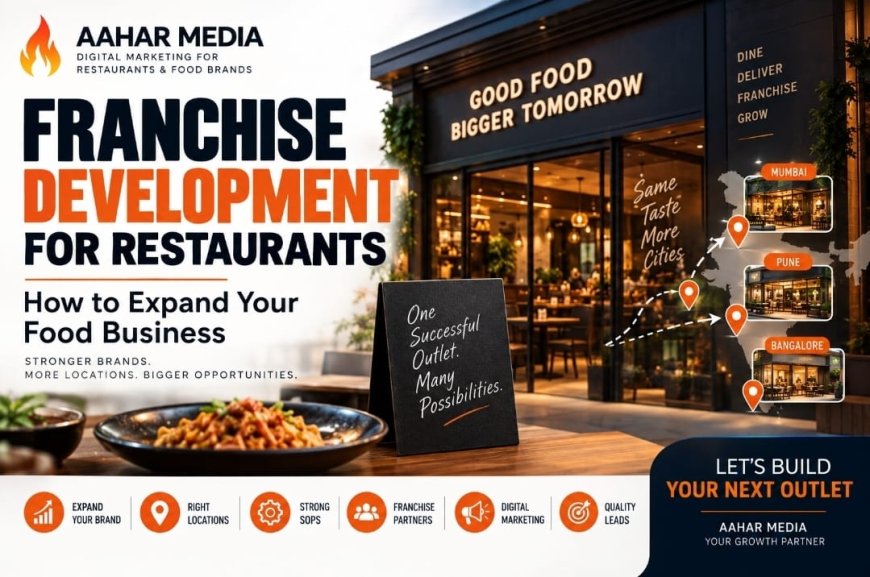
Building a successful restaurant is one challenge. Expanding that restaurant into multiple locations requires a structured business model, strong operations, and a clear growth strategy.
This is where franchise development for restaurants can become an effective expansion approach.
Instead of funding and managing every new outlet entirely on its own, a restaurant brand can work with franchise partners to enter new markets while providing them with the brand, systems, training, and operational support required to run the business.
Why Is Franchise Development Important for Restaurants?
Franchise development is not simply about selling franchise opportunities. It is about creating a repeatable business system that can operate successfully across multiple locations.
1. Expand With Lower Capital Requirements
Opening every new outlet using only company funds requires investment in interiors, equipment, staff, inventory, rent, and marketing.
With a franchise model, the franchise partner typically invests in setting up the outlet according to the agreed structure. This can allow the brand to explore more locations without funding every outlet entirely on its own.
2. Enter New Markets
Franchise partners can bring local knowledge about customers, locations, competition, rental markets, and business conditions.
This can help an established restaurant explore new cities and markets through a more localized expansion approach.
3. Build a Stronger Brand Presence
Multiple outlets increase the number of customer touchpoints and can improve brand visibility across different locations.
A successful local restaurant can gradually develop into a larger regional or multi-city food brand through a structured franchise network.
4. Create a Repeatable Business Model
Franchising encourages the restaurant to document and standardize its operations.
This can include:
Recipes and portion sizes
Kitchen procedures
Staff responsibilities
Hygiene standards
Inventory management
Customer service
Training systems
Marketing guidelines
Quality control
These systems help maintain consistency as the number of outlets increases.
5. Develop Additional Revenue Opportunities
Depending on the franchise structure, the brand may generate revenue through franchise fees, royalties, product supply, or other agreed commercial arrangements.
The exact structure should be clearly defined before the franchise is offered to partners.
6. Grow Through Franchise Partners
Franchise partners invest their capital, time, and local resources into operating the outlet.
The franchisor can focus on maintaining the brand, systems, training, product standards, marketing, and overall franchise support.
7. Build a Long-Term Expansion System
The biggest advantage of franchise development is creating a repeatable expansion process rather than treating every new outlet as a separate project.
A structured process can look like:
Market Selection → Location → Franchise Partner → Training → Outlet Setup → Launch Marketing → Operations → Performance Monitoring
This creates a more systematic approach to restaurant expansion.
Choosing the Right Franchise Model
Two commonly used structures are FOFO and FOCO.
FOFO – Franchise Owned, Franchise Operated
The franchise partner invests in and operates the outlet, while the brand provides the business system, training, brand standards, and support.
FOCO – Franchise Owned, Company Operated
The franchise partner invests in the outlet, while the company manages its day-to-day operations.
The right model depends on the restaurant's investment capacity, operational team, expansion goals, and desired level of control.
SOPs Are Essential Before Franchising
A restaurant cannot depend only on the owner's experience.
Before franchise expansion, the business should develop clear Standard Operating Procedures (SOPs) covering food preparation, staff training, hygiene, inventory, customer service, billing, opening and closing procedures, and quality control.
The objective is simple:
Customers should receive a consistent experience across every outlet.
Choosing the Right Franchise Location
Location can significantly affect outlet performance.
Before selecting a location, evaluate:
Target customers
Footfall
Competition
Rental cost
Visibility
Accessibility
Parking
Delivery potential
Local demand
The location should match the restaurant's business model and target audience.
Digital Marketing for Franchise Development
A strong franchise opportunity also needs a strong digital presence.
A franchise marketing strategy can include:
Google Ads for high-intent franchise enquiries
Meta Ads for targeted lead generation
SEO for long-term search visibility
Social media for brand credibility
Franchise landing pages to explain the opportunity
Reels and content to showcase the brand and outlets
Google Business Profile marketing for local visibility
The objective should not be to generate the maximum number of enquiries. It should be to attract relevant and qualified franchise prospects.
How AAHAR Media Supports Franchise Development
AAHAR Media works with restaurants, QSRs, cafés, and food brands on the digital marketing side of franchise expansion.
Our services include:
Franchise lead generation
Meta Ads
Google Ads
SEO
Social media marketing
Franchise landing pages
AI Reels and content
Food and outlet photography
Google Business Profile marketing
New outlet launch campaigns
Local marketing
The focus is to help food brands build visibility, communicate their franchise opportunity, generate relevant enquiries, and support new outlet launches through digital marketing.
Is Your Restaurant Ready for Franchising?
Before starting franchise expansion, ask:
Is the current outlet consistently performing?
Are your recipes and processes standardized?
Do you have proper SOPs?
Can another person operate the business successfully?
Is your brand clearly positioned?
Do you have a suitable franchise model?
Can you train and support franchise partners?
Can you maintain food and service quality across locations?
Do you have a clear marketing and lead-generation strategy?
If these systems are not yet in place, strengthening the existing business should come before aggressive franchise expansion.
Franchise development can help restaurants move from a successful single outlet to a structured multi-location business.
However, successful franchising requires more than a good menu. It requires a replicable business model, strong SOPs, suitable locations, clear franchise terms, consistent brand standards, and a professional marketing strategy.
With the right foundation, restaurant brands can build a scalable expansion system and enter new markets through suitable franchise partners.
Planning to expand your restaurant or QSR through franchising? Connect with AAHAR Media to build your franchise marketing and lead-generation strategy.
Source: aaharmedia.com | https://share.google/xMlGTyWM5WVOCwZf0
What's Your Reaction?