

































PIYUSH SONI:THE ARTIST WHO DISAPPEARED TO FIND MUSIC
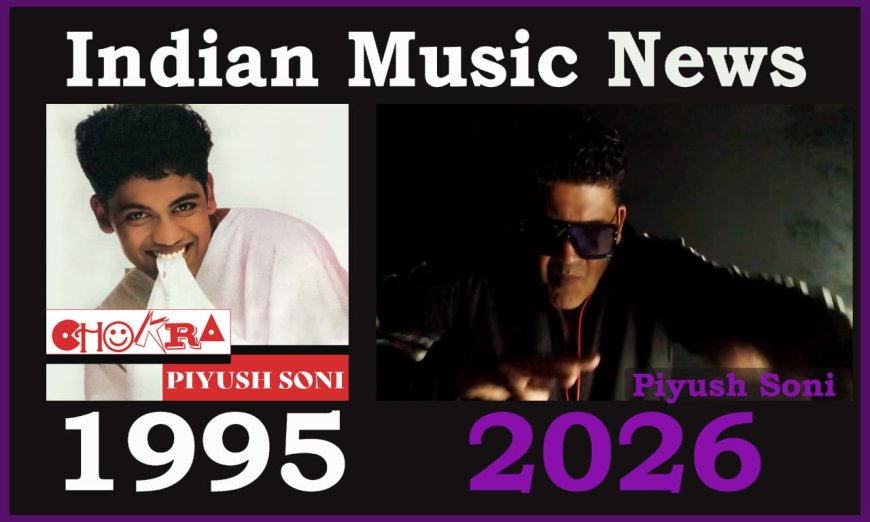
Do you remember “Chokra”?
Maybe you do.
Maybe you don't.
But somewhere in the memories of the 1990s, there was a young artist named Piyush Soni.
In 1995, he released “Chokra,” featuring five young boys dancing in Nepal. The song travelled far beyond expectations and became closely associated with Sri Lanka's historic 1996 Cricket World Cup celebrations, appearing repeatedly across television and news coverage.
For a young musician, it could have been the beginning of a long commercial career.
But Piyush chose something completely different.
He disappeared.
Not from music.
From the music industry.
And what he did next may be more interesting than what he had already achieved.
HE DIDN'T STOP MAKING MUSIC.
HE STARTED STUDYING IT.
Around 2000, Piyush walked away from the commercial music world.
Instead of chasing albums, publicity and popularity, he travelled across India.
From villages to temples.
From weddings to festivals.
From folk musicians to Sufi singers.
He listened to music that wasn't created for charts, but because music was part of life.
He discovered instruments, traditions and melodies that had survived through generations.
And slowly, he understood something:
Indian music is not simply something you hear. It is something you experience.
A rhythm can carry a village.
A voice can carry a tradition.
An instrument can carry centuries of memory.
Piyush wanted to understand that — not from books, but from the people who were living it.
THEN HE WENT DEEPER.
While studying India's musical roots, Piyush taught himself modern music production.
Recording.
Sound design.
Digital audio.
DJ software.
Composition.
Arrangement.
Mixing.
Mastering.
He studied how music behaves through speakers and headphones, and how modern audiences experience sound.
Years became more years.
16–17 years of learning.
But he still wasn't finished.
THEN INDIA TOOK HIM TO GOA.
Goa opened another door.
Piyush found himself surrounded by musicians from around the world — DJs, ecstatic dance artists, mantra musicians, jazz players, lounge performers, acoustic musicians and experimental artists.
Once again, he became a student.
He listened to their instruments, rhythms, voices, textures and performance techniques.
He wasn't simply enjoying the music.
He was studying it.
For another six years, Goa became his classroom.
And eventually, one question emerged:
Can ancient Indian music and contemporary international sound come together without losing the soul of either?
That question became the foundation of his next chapter.
MAKING INDIA SOUND DIFFERENT.
Piyush spent another two years exploring how Indian cultural sounds, instruments and melodies could be presented with contemporary international production.
Not to make Indian music sound Western.
But to make the world hear India differently.
And then he started releasing.
Over the last two years, he has created around 110 tracks.
But he doesn't consider them the destination.
He considers them experiments.
A conversation with the audience.
A way of discovering what connects, what moves people and what happens when ancient Indian inspiration meets contemporary sound.
His own words say it best:
“The 110 tracks were only testing the audience. The serious work starts now.”
FROM INDIA TO MORE THAN 120 COUNTRIES.
The music has already travelled far beyond India.
Piyush Soni's music is now reaching listeners in more than 120 countries, while some of his tracks have crossed the billion-view mark.
But for Piyush, the numbers are only part of the story.
The real achievement is seeing music rooted in Indian culture travel across languages, borders and generations — and still create an emotional connection.
From India to Europe.
From Russia to Asia.
From the Middle East to the Americas.
The sound keeps travelling.
NO AUTOTUNE. NO AI.
JUST THE MUSIC.
There is another important part of Piyush's philosophy.
He does not use Auto-Tune or AI to create or replace the human element of his music.
After decades of studying real instruments, traditional musicians and human performance, authenticity matters to him.
The character of an instrument.
The emotion in a voice.
The imperfections of a real performance.
The unexpected moments.
These aren't things to eliminate.
They are part of the music.
Technology may help with production and presentation, but the creative soul remains human.
SO WHAT COMES NEXT?
Piyush is no longer the young artist who released “Chokra” in 1995.
He is an artist carrying decades of travelling, listening, studying and experimentation.
He has studied India from the inside.
International music from the outside.
Technology.
Audiences.
Tradition.
And now he wants to bring all of it together.
His vision extends beyond his own releases.
He wants to work with artists, record labels, film producers, directors, production houses and international brands to create music for films, documentaries, advertising, corporate anthems entertainment and global productions.
Music that can travel internationally while carrying something unmistakably Indian within it.
Because for him, this isn't simply about making another song.
It is about taking the musical soul of India to the world.
FROM 1995 TO NOW.
A young man released a song.
The song travelled.
The artist disappeared.
But behind the scenes, the journey continued.
He travelled through India.
He studied its traditions.
He studied international music.
He studied technology.
He studied audiences.
He experimented.
He learned.
He started again.
And after almost three decades...
he is still here.
Still creating.
Still learning.
Still searching.
But this time, he isn't searching for success.
He is searching for a sound.
A sound that can carry the ancient spirit of India into the ears of a new generation.
A sound that can cross languages.
Cross borders.
Cross cultures.
And perhaps most importantly...
make the world feel India.
PIYUSH SONI
27 Years of Listening.
27 Years of Learning.
More Than 120 Countries.
Billions of Views.
One Journey.
One Question.
What does the future of Indian music sound like?
Perhaps we are about to find out.
Connect with Piyush Soni
For collaboration, music projects, corporate anthems and other professionals enquiries, Piyush Soni can be contacted directly at: piyushsoni2007@gmail.com
His music link on Spotify- https://open.spotify.com/artist/6eEoP7ulQkn4g4xBQOvwpy?si=tIq-ihNUTmSThcGq0XBaVw&utm_source=whatsapp
What's Your Reaction?