

































How Bhargav Kalariya Is Using Full-Stack Development to Build Digital Solutions for Businesses
Surat, Gujarat — Digital transformation is no longer limited to large corporations. Small businesses, startups, independent professionals and emerging service providers increasingly rely on websites, mobile applications and customized software to reach customers and manage their operations. For freelance developer Bhargav Kalariya, this changing environment has created opportunities to build technology around practical business needs. Kalariya is an independent Full-Stack Developer whose work […]
Surat, Gujarat — Digital transformation is no longer limited to large corporations. Small businesses, startups, independent professionals and emerging service providers increasingly rely on websites, mobile applications and customized software to reach customers and manage their operations. For freelance developer Bhargav Kalariya, this changing environment has created opportunities to build technology around practical business needs.
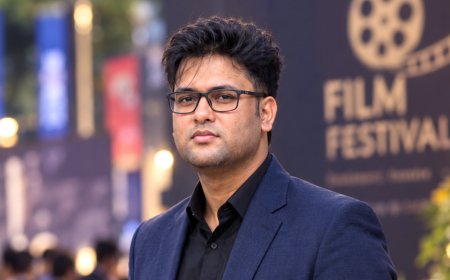
Kalariya is an independent Full-Stack Developer whose work spans websites, web applications, mobile applications, booking platforms and business-oriented digital products.
Rather than focusing on a single type of application, his development work covers different industries and use cases. This approach has allowed him to build experience across frontend interfaces, backend services, databases, APIs and deployment.
A Full-Stack Approach to Software Development
Full-stack development requires an understanding of multiple layers of a digital product.
On the frontend, Kalariya works with technologies including React, HTML, CSS and JavaScript. For mobile development, he works with Flutter, while backend and application services can involve Node.js. His development toolkit also includes MongoDB and Firebase, along with cloud and deployment technologies.
Working across these layers enables a developer to understand how different components of an application interact.
For a business owner, that can mean having a single development workflow covering everything from the user interface to the underlying database and application services.
Developing Applications Around Real-World Services
A recurring theme in Kalariya’s portfolio is the development of applications connected to everyday services.
Projects associated with his work include Currant, a car-booking application, Spireet, a box-cricket booking application, and Trennd, a salon-booking application.
These types of applications require more than a visually appealing interface. They need to accommodate users, service information, booking workflows and data management.
Building such projects gives developers an opportunity to understand how technology can be structured around actual customer journeys.
More Than 30 Website Projects
Kalariya has built a portfolio containing more than 30 website projects, alongside mobile applications and other software projects.
The variety of projects has exposed him to different requirements, ranging from business websites and landing pages to application dashboards and service platforms.
For an independent developer, working on projects with different requirements can also provide a continuous learning environment. Each project can introduce new design considerations, technical integrations or deployment challenges.
Exploring Modern Development Technologies
Software development is changing rapidly, particularly with the increasing use of artificial intelligence and cloud-based development tools.
Kalariya has explored AI-assisted development as part of his workflow. These tools can help developers investigate implementation approaches, automate repetitive tasks and accelerate certain stages of development.
At the same time, the fundamentals of software engineering remain important. Requirements analysis, application architecture, security, testing and maintainability continue to influence whether a digital product works effectively over time.
His development approach combines these traditional principles with newer tools and technologies.
Flutter and Cross-Platform Application Development
Mobile applications form another part of Kalariya’s technical interests.
Using Flutter allows developers to build applications for multiple platforms from a shared codebase. Kalariya has used Flutter in application development as well as experimental projects.
His public developer activity includes projects such as a Color Switch game and a Flappy Birds implementation, reflecting experimentation with interactive application development alongside business-focused software.
Helping Smaller Businesses Enter the Digital Economy
For many smaller organizations, hiring a large technology team is not practical.
Freelance developers can provide an alternative by allowing businesses to commission specific digital products according to their requirements and budgets.
Kalariya’s freelance model is built around this type of work: understanding what a client needs, identifying the appropriate technology and developing a solution that can be deployed and maintained.
This can include websites, mobile applications, APIs, database systems, authentication mechanisms and integrations with third-party services.
Continuing to Learn and Experiment
Technology changes quickly, making continuous learning an important part of software development.
Kalariya’s work across multiple frameworks and project categories reflects an interest in expanding his technical capabilities rather than limiting himself to one development environment.
His exposure to technologies such as AWS and Docker also reflects the growing importance of cloud infrastructure and modern deployment practices in application development.
The Road Ahead
As businesses continue moving their services online, demand for customized digital products is expected to remain significant.
For independent developers, this creates opportunities to work directly with businesses and entrepreneurs while gaining experience across different industries.
Bhargav Kalariya’s development journey reflects this broader shift. Through freelance development, experimentation and project-based learning, he continues to build websites, applications and digital solutions designed around practical requirements.
His long-term focus remains on becoming a stronger technology professional while helping businesses transform ideas into functional digital products.
What's Your Reaction?