
















































From Trading Psychology to Algorithmic Clarity: How Automation Is Changing the Game for Traders
New Delhi [India], October 30: That nagging doubt after a loss. The sweaty palms when a trade moves against you. The temptation to break your own rules “just this once.” For years, trading success has meant winning an exhausting psychological battle against yourself. The traditional advice sounds simple enough: keep a detailed journal, manage your […] The post From Trading Psychology to Algorithmic Clarity: How Automation Is Changing the Game for Traders first appeared on HindustanMetro.com.
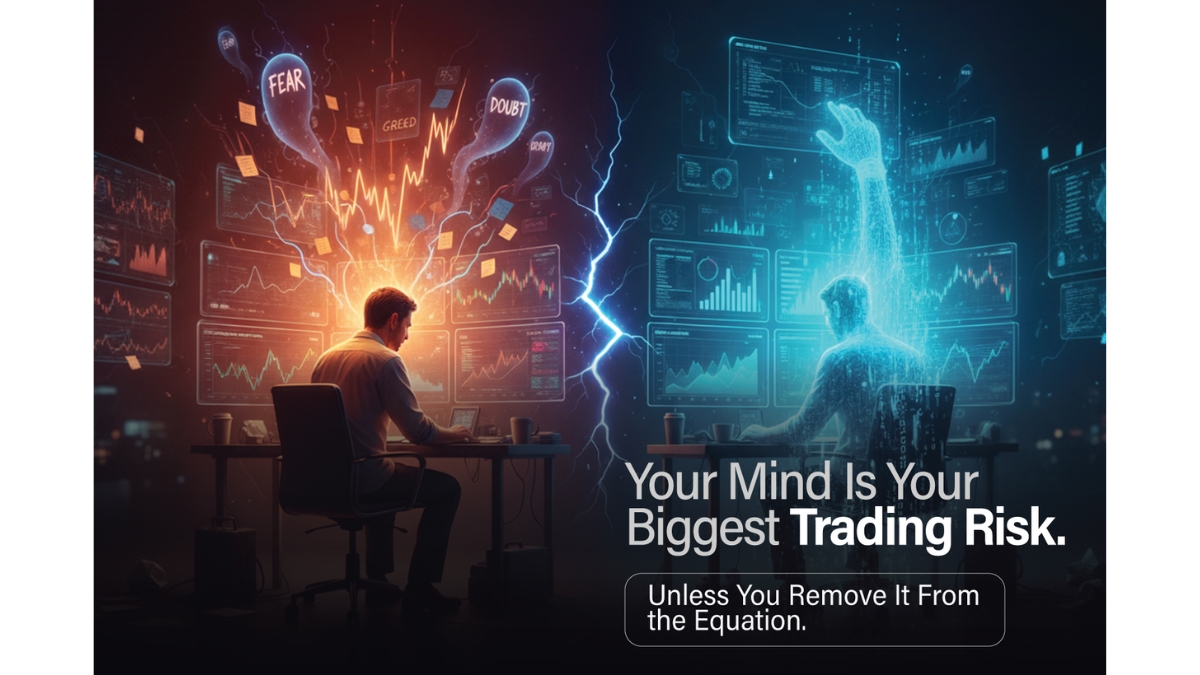
New Delhi [India], October 30: That nagging doubt after a loss. The sweaty palms when a trade moves against you. The temptation to break your own rules “just this once.” For years, trading success has meant winning an exhausting psychological battle against yourself.
The traditional advice sounds simple enough: keep a detailed journal, manage your anxiety, stick to your identity as a disciplined trader, prepare for losses, and don’t sabotage your wins. But anyone who’s tried knows these aren’t simple at all. They require constant vigilance, endless self-reflection, and willpower that rarely holds up under pressure.
Here’s the interesting part: many traders are discovering that these psychological challenges simply disappear when they switch to algorithmic trading.
The Problem with Being Human
Think about what manual trading demands from you. Every single decision runs through your emotions first. You see a setup. Your heart rate increases. Should you enter? Is it too late? What if you’re wrong again?
Even the most experienced traders struggle with this. They’re told to journal every mistake—every time they move their stop loss, enter too early, or hold too long. The goal is to spot patterns in their behavior and fix them. But it’s draining work, and many traders quietly skip it after a rough day (which is exactly when they need it most).
Then there’s the anxiety. Manual traders watch every price tick, every candle formation. They refresh their screens compulsively. They lose sleep. Some set seventeen alarms just to check if their trade is still safe. The advice? “Detach emotionally.” But how do you detach from something you’re watching every minute?
When the Computer Takes Over
Algorithmic trading changes everything—not because it makes trading easier, but because it removes you from the emotional battlefield entirely.
The algorithm doesn’t have bad days. It doesn’t feel anxious at 2 AM, wondering if it should have closed that position. It executes trades based purely on logic: if X happens, do Y. No hesitation, no second-guessing, no “let me check one more time.”
Take journaling, for example. In manual trading, you have to force yourself to write down what went wrong. With algorithms, every single trade is automatically recorded. You can review it all later in clean spreadsheets and charts—without the shame or frustration that comes with admitting you broke your own rules. The algorithm doesn’t break rules. It is the rules.
The anxiety piece is even more striking. Instead of watching every price movement with sweaty palms, you’re checking system performance over days or weeks. The question shifts from “Should I exit now?” to “Is my strategy working over time?” It’s the difference between being in the ocean during a storm versus analysing weather patterns from shore.
The Five Pillars, Reimagined
Manual traders are taught to “trade from identity, not emotion”—to anchor their self-worth to their process rather than individual wins and losses. This is incredibly hard. After three losses in a row, even strong traders start to doubt themselves.
Algorithms don’t have this problem. Their identity is literally written in code. They follow the same logic on trade 1 and trade 1,000. A human might think, “I’m only as good as my last trade.” An algorithmic trader thinks, “My edge is statistical—it only shows up across many trades.”
Drawdown protocols—the rules for what to do when you’re losing money—are another psychological minefield for manual traders. You’re supposed to cut your risk, take a break, and reset emotionally. But when you’re stressed and down on money, that’s exactly when discipline fails.
With algorithmic systems, drawdown rules are simply programmed in. After a 2% loss, the system automatically reduces position sizes. No willpower required. The emotional decision becomes a mechanical certainty.
Even the fear of success—yes, that’s a real thing—evaporates with algorithms. Some traders unconsciously sabotage themselves when things are going well, taking bigger risks or closing winners too early. Code doesn’t do this. It treats winning trades exactly the same as losing ones: as data points to learn from.
The Real Work Begins
None of this means algorithmic trading is a magic button. You still need to design smart strategies, test them thoroughly, and monitor their performance. You still need to understand markets.
But here’s what changes: all that mental energy you used to spend battling your emotions? It goes toward creative problem-solving instead. Better strategy design. Smarter risk management. Higher-level thinking about portfolio construction.
This shift is happening industry-wide. Platforms like Q7 Trading Solutions are making algorithmic tools accessible to individual traders who previously had to rely on willpower alone. It’s not about removing discipline—it’s about building it into the system itself.
A Different Kind of Mastery
For decades, trading mastery meant surviving the psychological gauntlet. The best traders were those who could maintain discipline despite crushing emotional pressure.
That’s still valuable. But now there’s another path: building systems that embody that discipline automatically. Where consistency doesn’t require daily heroics. Where your worst enemy—yourself—becomes your best ally through careful automation.
The tools that were once available only to big institutions are now in reach of anyone willing to learn them. And as more traders discover this path, the old narrative about “trading through the pain” is starting to seem unnecessary.
Maybe the real mastery isn’t learning to override your emotions. Maybe it’s learning to design systems that don’t trigger them in the first place.
Disclaimer: This is a press release for informational purposes only and should not be considered a substitute for professional advice or decision-making. Investing in stocks includes financial risks, and past performance is not indicative of future results. Readers should conduct their own research or consult with a qualified advisor before making any decisions.
The post From Trading Psychology to Algorithmic Clarity: How Automation Is Changing the Game for Traders first appeared on HindustanMetro.com.
What's Your Reaction?