















































How Dakloni Masala Is Riding India's D2C Grocery Wave With a 1983 Legacy
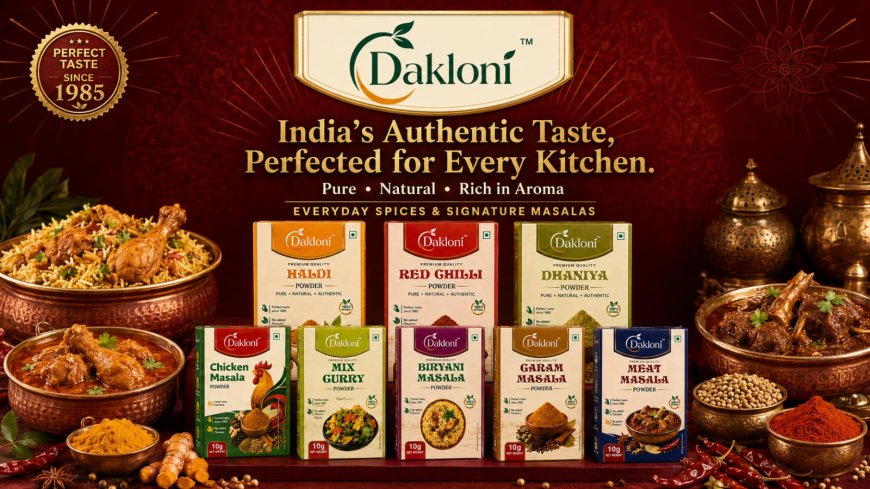
India's direct-to-consumer grocery segment has grown rapidly over the past few years, as households increasingly order pantry staples online rather than at neighbourhood stores. Spices, once considered a category tied firmly to physical retail and trusted local sellers, are now part of that shift too. Dakloni Masala, a spice and dry fruits brand with roots going back to 1983 in Odisha, is one example of a heritage regional player adapting to this digital-first buying behaviour, selling directly to customers through its own website under parent company Green Chocy Pvt Ltd.
From Local Trust to National Reach
For decades, Dakloni Masala built its reputation the traditional way — through consistent quality and word-of-mouth trust within Odisha households. That kind of local credibility is hard to manufacture overnight, which is precisely why heritage brands making the jump to D2C often have an advantage over newer entrants: they are not starting from zero on trust, only on reach. Dakloni Masala's challenge, like many regional Indian food brands, has been translating decades of local goodwill into a proposition that resonates with customers who have never heard of the brand before.
Why D2C Makes Sense for a Spice Brand
Selling spices directly to consumers, rather than exclusively through distributors and retail shelves, gives a brand tighter control over several things that matter in this category: batch freshness, packaging integrity and the ability to communicate sourcing and hygiene claims directly to the end customer without a retailer diluting the message. Dakloni Masala's D2C model, run through Dakloni.com and Dakloni.in, allows the brand to sell its Turmeric Powder, Red Chilli and Kashmiri Red Chilli Powder, Garam Masala, Garlic Powder, Onion Powder and dry fruits range directly, with product and quality information presented exactly as the company intends it.
Social Media as a Trust-Building Tool
Alongside its website, Dakloni Masala maintains a presence on Instagram and Facebook, platforms that have become central to how Indian D2C food brands build familiarity with new audiences. For a spice brand, this typically means sharing details about sourcing, process and product use — content that helps a customer who has never tasted the product decide whether to trust it enough to order online, where they cannot smell or examine the spice before buying, unlike at a physical store.
Organic Positioning in a Crowded Market
The Indian spice market includes everything from large listed FMCG players to thousands of small unbranded local sellers. Dakloni Masala positions itself in the middle ground: a branded, traceable product with claimed organic sourcing and hygienic processing, aimed at customers who want more assurance than an unbranded seller offers but still value regional authenticity over a purely mass-market packaged brand. This organic, hygiene-first positioning is a common strategy among newer D2C spice players trying to differentiate from established competitors on trust rather than price alone.
Dry Fruits: A Natural Category Extension
Dakloni Masala's decision to sell dry fruits — cashews, almonds, walnuts, pistachios and raisins — alongside its spice range fits a broader D2C pattern: once a brand has a customer's trust and a delivery relationship established, expanding into adjacent pantry categories is a natural way to increase order value without needing to acquire a new customer from scratch. Dry fruits also carry their own health-driven demand, commonly bought for their protein, fibre and micronutrient content, which broadens the brand's appeal beyond customers who are shopping purely for spices.
The Green Chocy Pvt Ltd Structure
Behind Dakloni Masala sits Green Chocy Pvt Ltd, the parent company responsible for the brand's operations and D2C strategy. Having a dedicated corporate structure behind a heritage spice brand is itself part of the modernisation story — it signals a formalised approach to scaling a business that began as a regional, largely informal spice-making operation more than 40 years ago.
The Bigger Picture for Regional Brands Going Online
Dakloni Masala's shift toward D2C selling is part of a much larger pattern playing out across India's food and grocery sector. Regional brands that once depended entirely on local retail relationships are increasingly finding that a website and a social media presence can do what decades of physical expansion could not — put their product in front of a customer in another state who has never heard of the brand before. For a spice maker like Dakloni Masala, this means competing not just on taste but on how clearly it can communicate sourcing, hygiene and authenticity to someone who cannot walk into a store and ask a shopkeeper about the product firsthand.
What Customers Look For When Buying Spices Online
Industry observations suggest that customers buying spices online tend to weigh a few consistent factors: clear information about sourcing and processing, visible hygiene standards, and some signal of brand credibility, whether through customer reviews, social proof or a demonstrated track record. Dakloni Masala's approach of leading with its 1983 founding, its organic positioning and its Odisha heritage speaks directly to this pattern, giving first-time online buyers a reason to trust a brand they may be encountering for the very first time through a screen rather than a store shelf.
Where the Brand Sells
Customers can explore the full Dakloni Masala range and place orders directly through the brand's official websites:
The brand also maintains an active presence on social media:
As more Indian households normalise buying spices and pantry staples online, brands that can combine a credible legacy with a genuinely direct relationship with the customer — as Dakloni Masala is attempting to do — are likely to be among the better-positioned regional players in this shift, rather than being squeezed out by either large national FMCG brands or hyper-local unbranded sellers.
What's Your Reaction?